An effective method of communication is storytelling. The stories we tell can evoke emotion in the listener whether good or bad. Stories connect us to our experiences, fears, opinions, and other people. I want to tell this story only because it was so vivid, bizarre, and emotionally provocative, that I feel I must share it. It sounds like a scene from a sci-fi flick. It is dramatic; it's scary; it seems prophetic. Maybe you'll see symbolism in it. Maybe you'll feel inclined to offer an interpretation. Or maybe it'll just be an interesting story to read. Regardless, I welcome your feedback.
 I was awakened at 5:17 a.m. with my heart pounding from what my mind had just played before me like the latest blockbuster from Steven Spielberg. The details were still rattling around in my psyche as I lay back to review what I'd just witnessed. It was disturbing and too real, not at all dreamlike. The occurrences were feasible and connected like a complete scene. Not disjointed and impossible like so many dreams can be. Because of its reality, I was shaken and distraught. It was as if I had been given a secret glimpse into the horrors of the end of the world--when mankind would finally turn on himself and implode into this destructive, out-of-control cyclone of hatred and terror. It was more than I wanted to know. Like Daniel states in chapter 7, verse 15: "I, Daniel, was troubled in spirit, and the visions that passed through my mind disturbed me." Here's what I saw.
I was in my kitchen piddling around on a bright, sunny day. As I moved about, the day suddenly turned from bright to gray. I wondered what was going on because it wasn't like a cloud was moving in front of the sun. This was like dusk falling, and I knew it was far too early in the day for that. I questioned whether I had missed an announcement about a solar eclipse when suddenly the day turned to night. I immediately went to my kitchen window and looked out. The moon was bright, but a dark cloud was in front of it, and its beams cast a glow against the night sky. Then I saw snaking into my view the silhouettes of numerous small planes, lined up perfectly five across in a row with rows upon rows following each other. I could see their shapes darker than the night sky and hear their buzzing engines as they moved from left to right like a serpent slithering across the sky. Moving stealthily beneath them was the silhouette of a larger plane gliding in a direct line headed for the front of the crowd.
In this world of cameras and documenting every unusual thing on video, I turned to get my phone so I could record what I saw. I was mortified. I knew something was woefully wrong with this "army" that was gathering overhead. I didn't know if it was our army or if it was an enemy since I could see no identifying marks. But my gut told me something was terribly wrong--that not only were these actions unusual, they were foreboding. Something ominous was about to transpire. It was a setup. I raced around the kitchen a nervous wreck. I became frustrated because I couldn't locate my phone fast enough. I didn't know who I would show the video to, but I figured someone needed to know what was happening under the cover of darkness. I searched in my purse but couldn't find it. I darted around and panicked because I thought I would miss the moment. Finally I got my hands on it, and ran to the kitchen door. By this time, my 12-year-old daughter joined me.
We both stood in the doorway fumbling around with the phone trying to get it to record. I snapped at her because she was making it hard for me to hold the phone and film. When I looked up at the sky, I felt my 14-year-old son walk up next to me and look out the doorway as well. Then I saw it. A blood-curdling view of the entire episode: the big plane had positioned itself in front of all the smaller planes. It hovered in place as Leader. The glow of the lights from the section of the city in the southeast area of town (near where Ft. Jackson Army base is now located) looked distant, and I knew its inhabitants were unsuspecting. All of the smaller planes were now lined up behind the larger plane like so many soldiers in an army. They were countless and intimidating. They were in perfect formation with the big plane out front, engines droning in unison, not moving but seemingly satisfied they'd found the right location. The air was still, and aside from the sounds from the planes, there was no other movement, no sounds. It was deathly quiet. Before the next move happened, I started crying out "No, no, no, no" to myself at first. I knew what was coming. I could feel it in my spirit. I started to cry and scream. And then it happened.
The large plane rained down bombs upon the city in the distance. The bombs exploded loud and thunderous and as rapidly as firecrackers. I screamed again and headed back into my kitchen with my kids trailing behind me. I felt so incredibly helpless. I wanted to run for cover and crumple on the floor at the same time. I knew it was only a matter of time before bombs would be raining down on my section of the city as well. And I had no idea what to do. The thought of a bomb shelter flashed into my mind, but we had none. What could we do? How could I save myself and my children from certain death? There were no answers. There was just despair and panic. By my kitchen table, my mom (who passed away in 1994) lay sleeping on a window seat. I cried out to her, "Mama! Wake up! Wake up! They are bombing us!" She did not wake up, but I did. With a start.
My heart was pounding when I finally came to my senses and realized the whole thing was just a terrifying dream. I was a bit relieved by this realization, but the memory left me feeling vulnerable and afraid. It felt like prophecy, but that's not a gift I possess. Nonetheless, it was very much like Armageddon--what our end of days could be like.
So this is my story. Any interpretations? Thoughts?
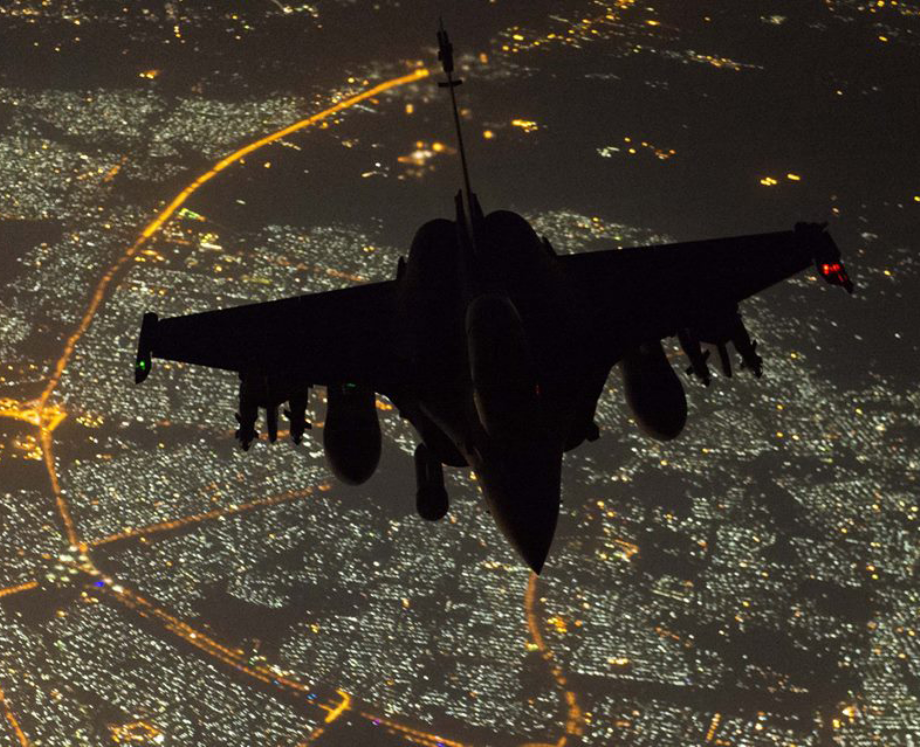
I was in my kitchen piddling around on a bright, sunny day. As I moved about, the day suddenly turned from bright to gray. I wondered what was going on because it wasn't like a cloud was moving in front of the sun. This was like dusk falling, and I knew it was far too early in the day for that. I questioned whether I had missed an announcement about a solar eclipse when suddenly the day turned to night. I immediately went to my kitchen window and looked out. The moon was bright, but a dark cloud was in front of it, and its beams cast a glow against the night sky. Then I saw snaking into my view the silhouettes of numerous small planes, lined up perfectly five across in a row with rows upon rows following each other. I could see their shapes darker than the night sky and hear their buzzing engines as they moved from left to right like a serpent slithering across the sky. Moving stealthily beneath them was the silhouette of a larger plane gliding in a direct line headed for the front of the crowd.
In this world of cameras and documenting every unusual thing on video, I turned to get my phone so I could record what I saw. I was mortified. I knew something was woefully wrong with this "army" that was gathering overhead. I didn't know if it was our army or if it was an enemy since I could see no identifying marks. But my gut told me something was terribly wrong--that not only were these actions unusual, they were foreboding. Something ominous was about to transpire. It was a setup. I raced around the kitchen a nervous wreck. I became frustrated because I couldn't locate my phone fast enough. I didn't know who I would show the video to, but I figured someone needed to know what was happening under the cover of darkness. I searched in my purse but couldn't find it. I darted around and panicked because I thought I would miss the moment. Finally I got my hands on it, and ran to the kitchen door. By this time, my 12-year-old daughter joined me.
We both stood in the doorway fumbling around with the phone trying to get it to record. I snapped at her because she was making it hard for me to hold the phone and film. When I looked up at the sky, I felt my 14-year-old son walk up next to me and look out the doorway as well. Then I saw it. A blood-curdling view of the entire episode: the big plane had positioned itself in front of all the smaller planes. It hovered in place as Leader. The glow of the lights from the section of the city in the southeast area of town (near where Ft. Jackson Army base is now located) looked distant, and I knew its inhabitants were unsuspecting. All of the smaller planes were now lined up behind the larger plane like so many soldiers in an army. They were countless and intimidating. They were in perfect formation with the big plane out front, engines droning in unison, not moving but seemingly satisfied they'd found the right location. The air was still, and aside from the sounds from the planes, there was no other movement, no sounds. It was deathly quiet. Before the next move happened, I started crying out "No, no, no, no" to myself at first. I knew what was coming. I could feel it in my spirit. I started to cry and scream. And then it happened.
The large plane rained down bombs upon the city in the distance. The bombs exploded loud and thunderous and as rapidly as firecrackers. I screamed again and headed back into my kitchen with my kids trailing behind me. I felt so incredibly helpless. I wanted to run for cover and crumple on the floor at the same time. I knew it was only a matter of time before bombs would be raining down on my section of the city as well. And I had no idea what to do. The thought of a bomb shelter flashed into my mind, but we had none. What could we do? How could I save myself and my children from certain death? There were no answers. There was just despair and panic. By my kitchen table, my mom (who passed away in 1994) lay sleeping on a window seat. I cried out to her, "Mama! Wake up! Wake up! They are bombing us!" She did not wake up, but I did. With a start.
My heart was pounding when I finally came to my senses and realized the whole thing was just a terrifying dream. I was a bit relieved by this realization, but the memory left me feeling vulnerable and afraid. It felt like prophecy, but that's not a gift I possess. Nonetheless, it was very much like Armageddon--what our end of days could be like.
So this is my story. Any interpretations? Thoughts?
Comments
Post a Comment